Table Manners
Twenty-four rules for any dinner, from the bread basket to the bill.
In short, good table manners come down to consideration. Wait for your host, keep your phone and your elbows off the table, use your cutlery for eating, pass instead of reaching, keep pace with the table and leave your place the way you'd like to find it. The 24 rules below cover the rest, from the bread basket to the bill.
Before you eat
-
Wait for your host to start
At a private dinner, your host sets the pace. Don't pick up your fork until they do, or until they ask everyone to begin. In a restaurant, wait until everyone at the table has been served.

-
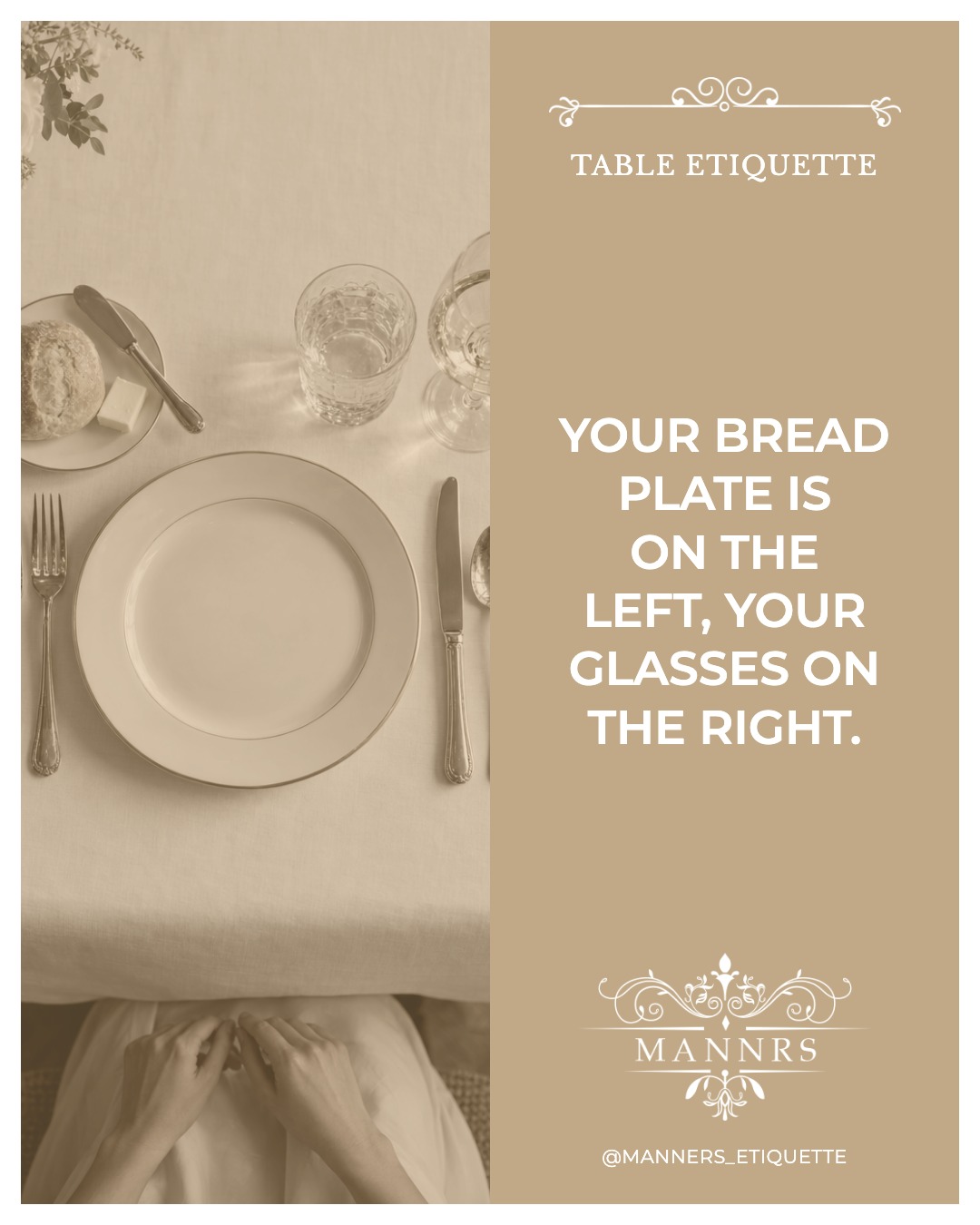
Your bread plate is on the left, your glasses on the right
Solids on the left, liquids on the right: the small plate to the left of your setting is yours, and so are the glasses to the right. If you're ever unsure, make a lowercase b with your left hand and a d with your right. Bread, drink.
-
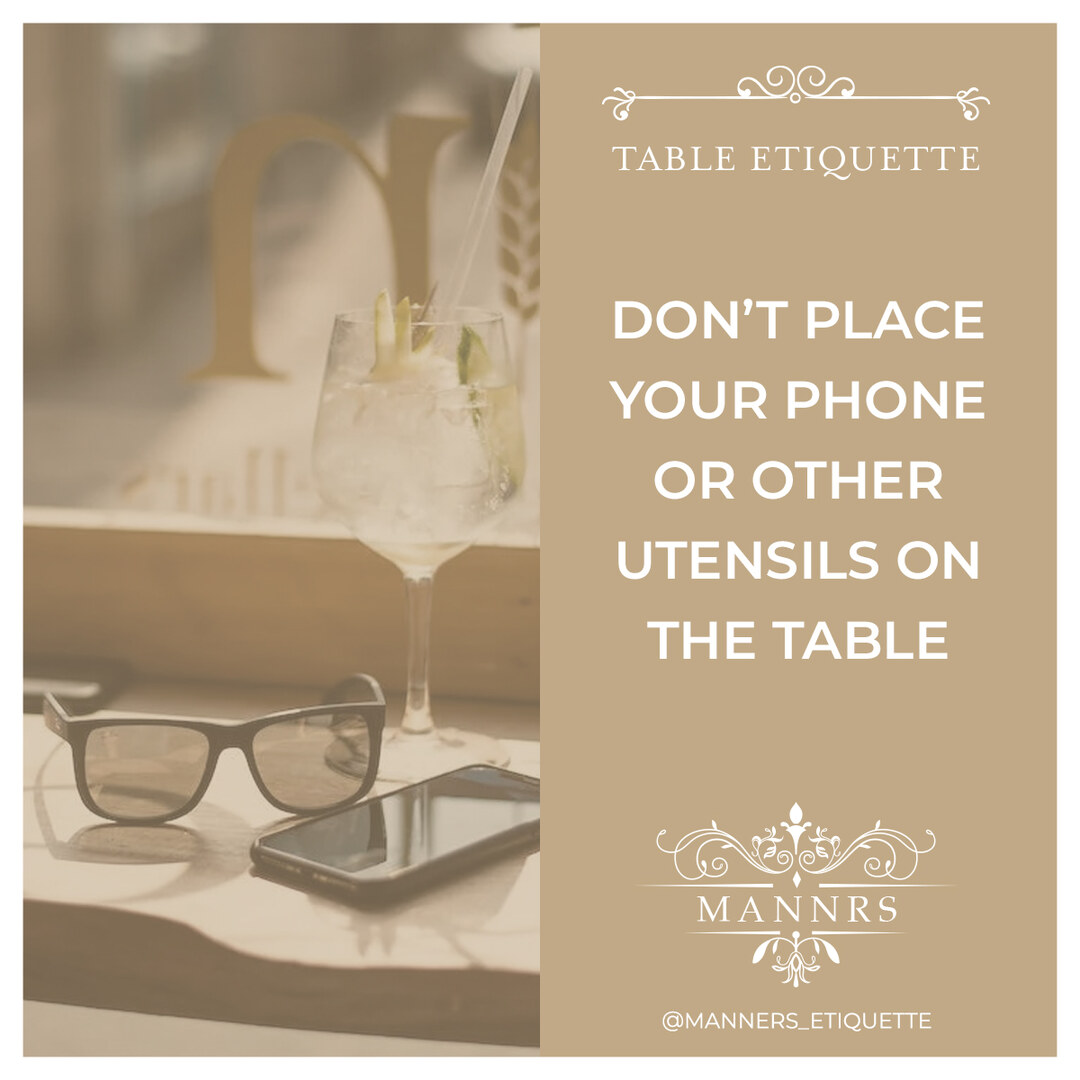
Keep your phone off the table
Phones, keys and sunglasses stay in your pocket or bag, not next to your plate. A phone on the table says you're expecting something more interesting than the company. If you're waiting for an urgent call, say so when you sit down.
-
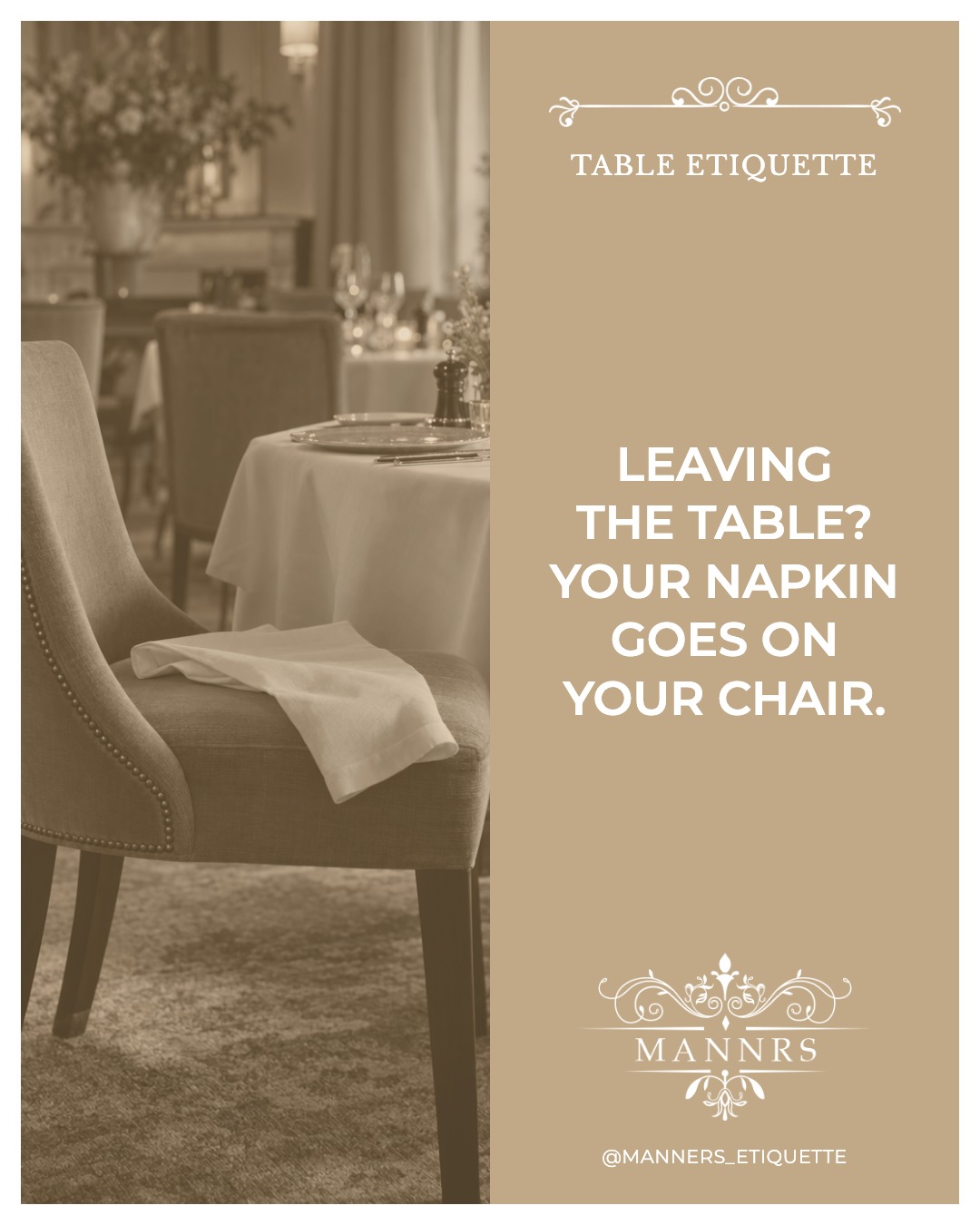
Napkin on your lap, and on your chair if you step away
Unfold your napkin and put it on your lap as soon as you sit down, or as soon as your host does. If you leave the table during the meal, leave it loosely on your chair. At the end, place it to the left of your plate.
Cutlery and glasses
-
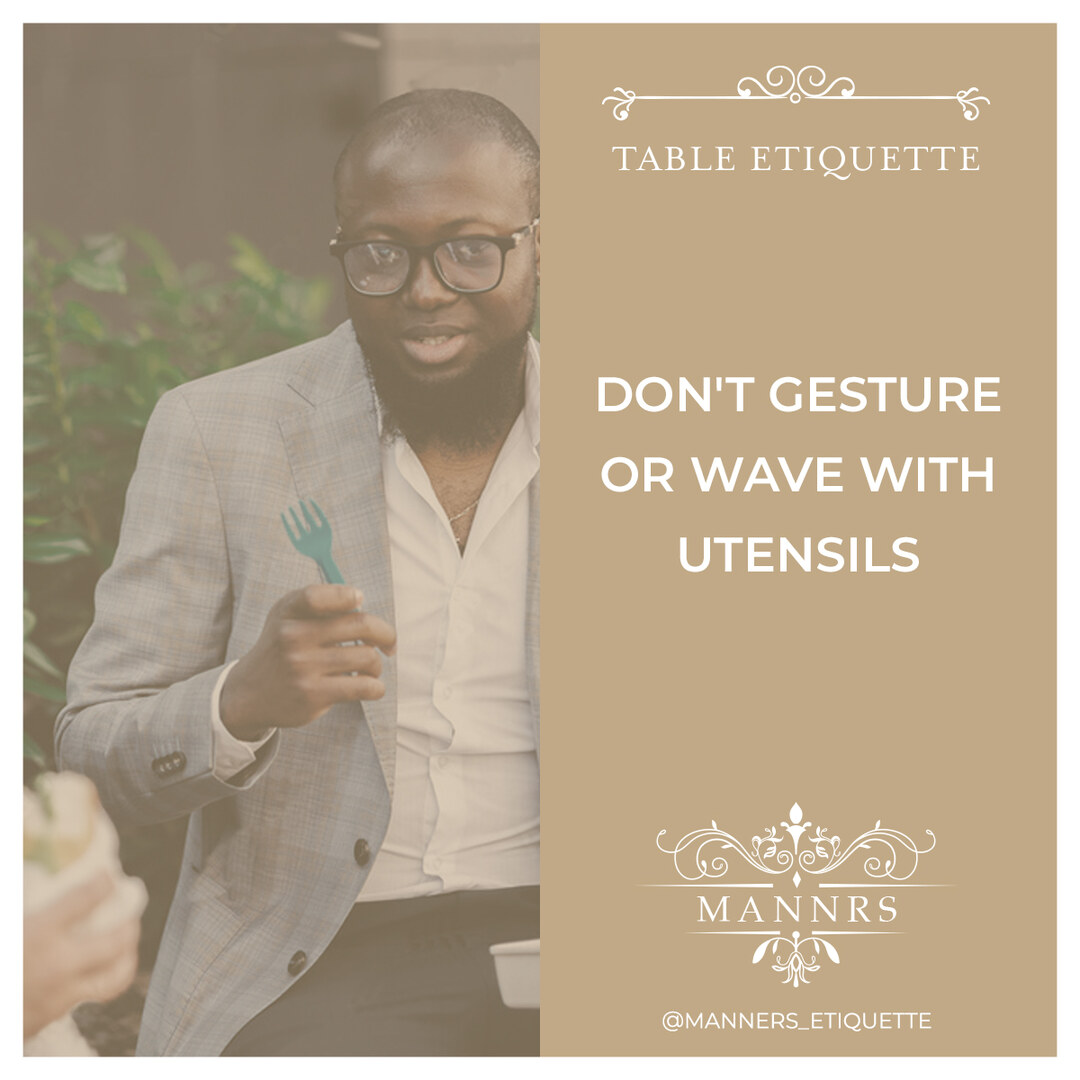
Use your cutlery for eating, not gesturing
A fork is not a pointer. If you need your hands to tell a story, put your cutlery down first. A knife waving through the air makes everyone nearby uneasy, whatever the story.
-
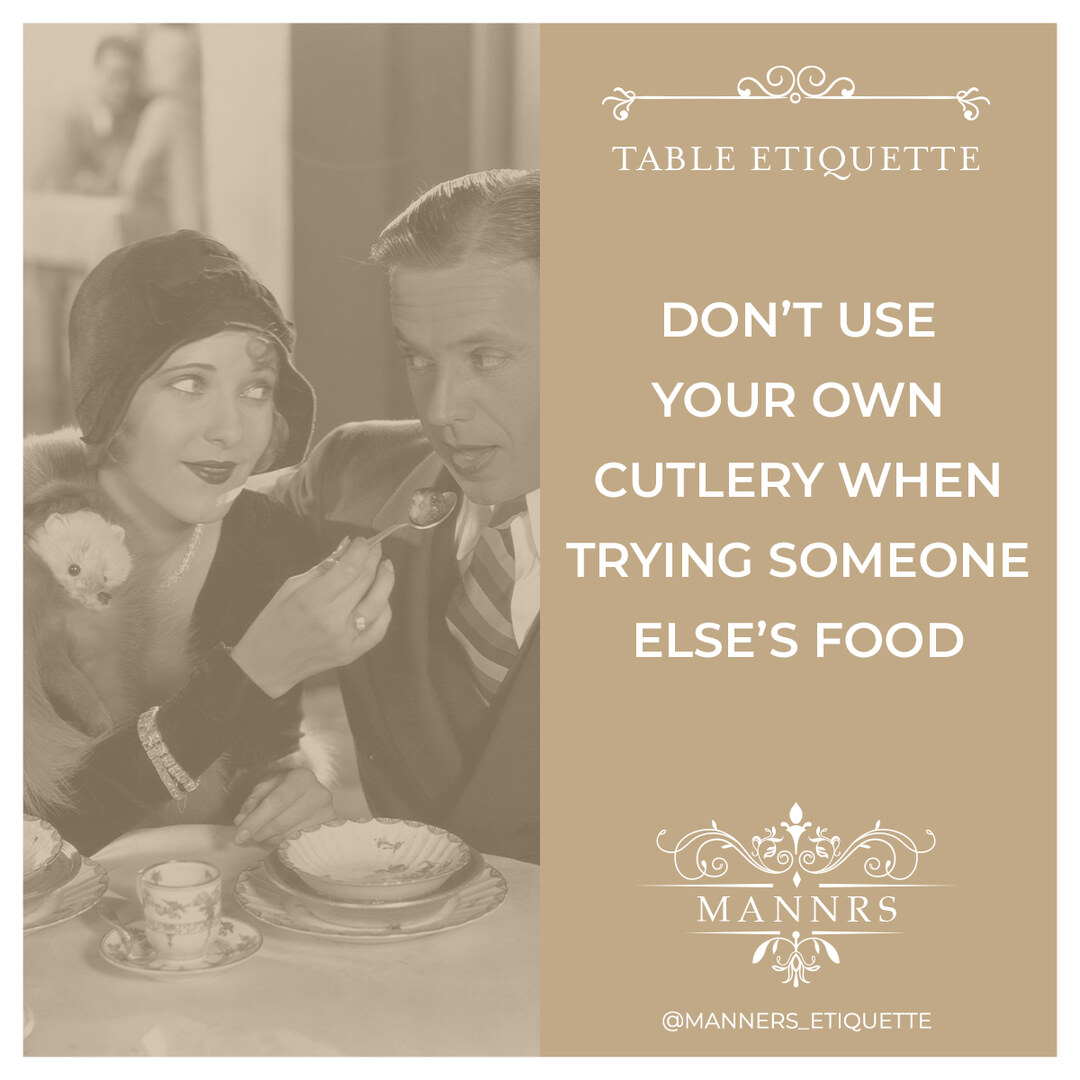
Keep your cutlery out of shared dishes and other people's plates
Want to try your neighbour's dish? Ask them to put a bite on your bread plate, or use a clean fork. The same goes for shared jars and bowls: use the serving spoon, never the knife you've been eating with.
-
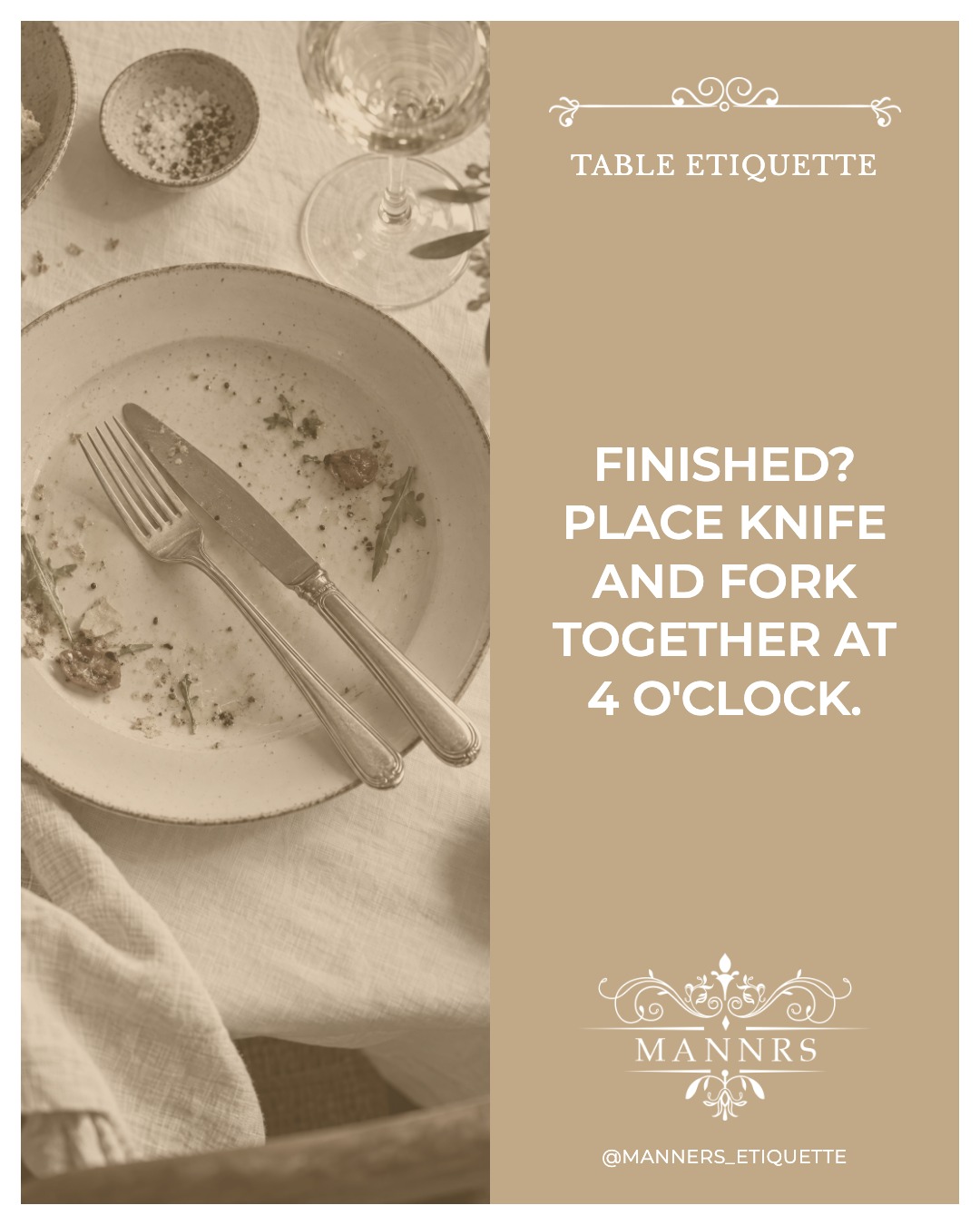
Finished? Knife and fork together at four o'clock
Lay your knife and fork side by side on the plate, handles pointing to about four o'clock, blade facing in. That tells the staff you're done without a word. Cutlery resting apart on either side of the plate means you're only pausing.
-
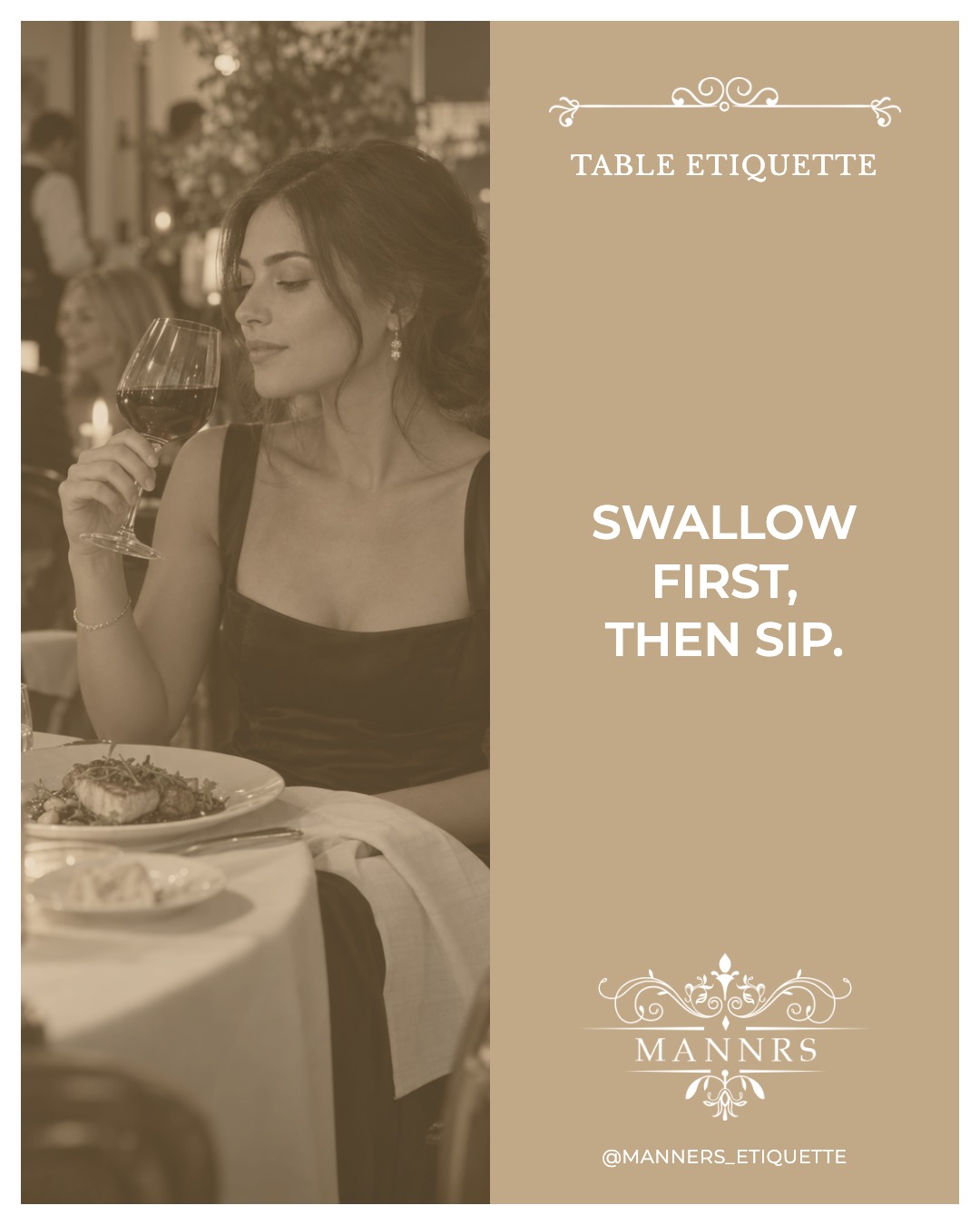
Swallow first, then sip
Finish the bite in your mouth before you reach for your glass. Drinking with food in your mouth is unpleasant to watch and leaves marks on the rim of the glass.
-
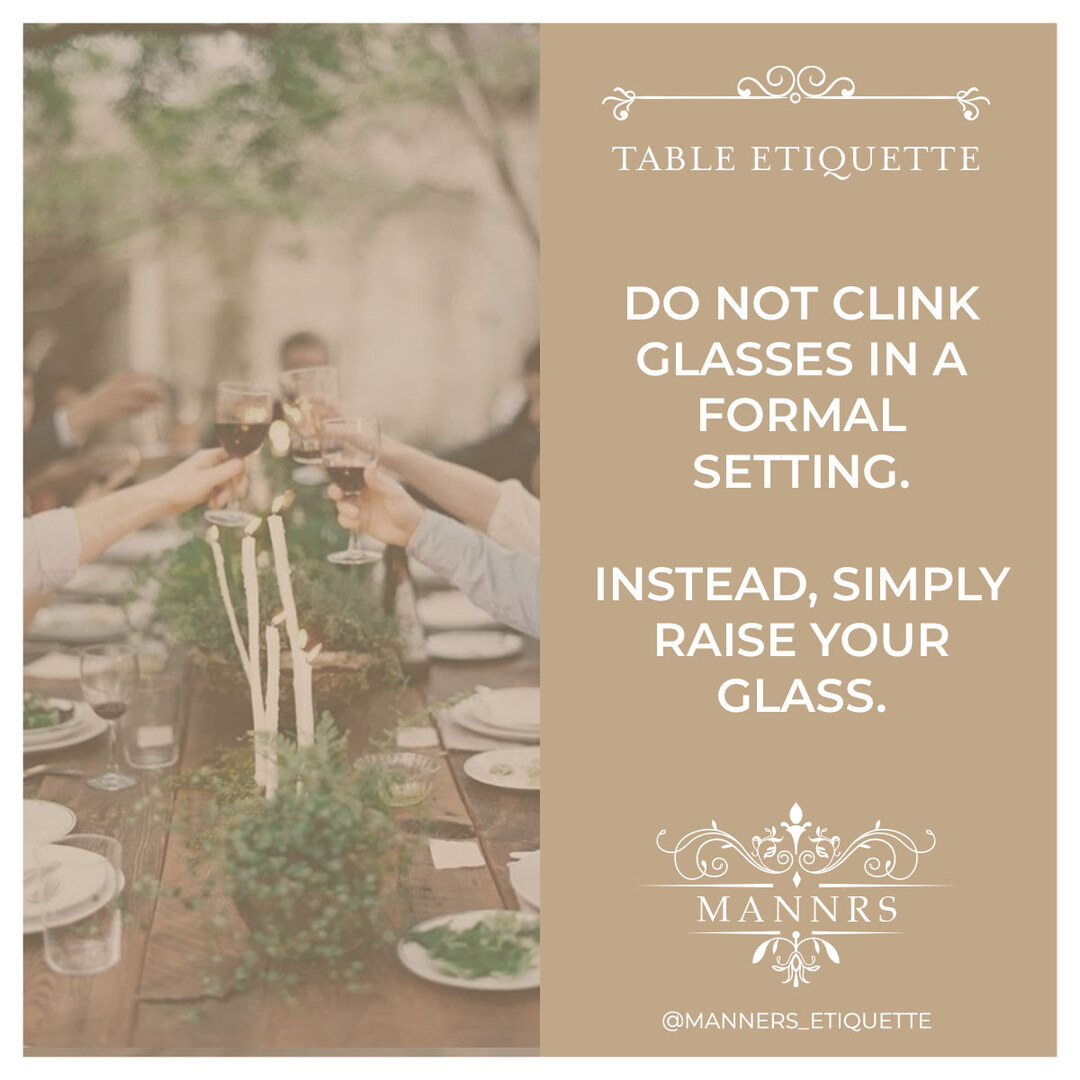
Raise your glass; don't clink at a formal dinner
Among friends, clinking glasses is part of the fun. At a formal dinner, raise your glass toward the person you're toasting, meet their eyes and take a sip. It's quieter, and fine glassware will thank you.
-
Never put a used tea bag on the saucer
The saucer is for the cup. Ask for a small dish for the tea bag, or leave the bag in the pot if the tea was brewed that way. A wet tea bag on the saucer stains it and drips with every sip.

Food
-
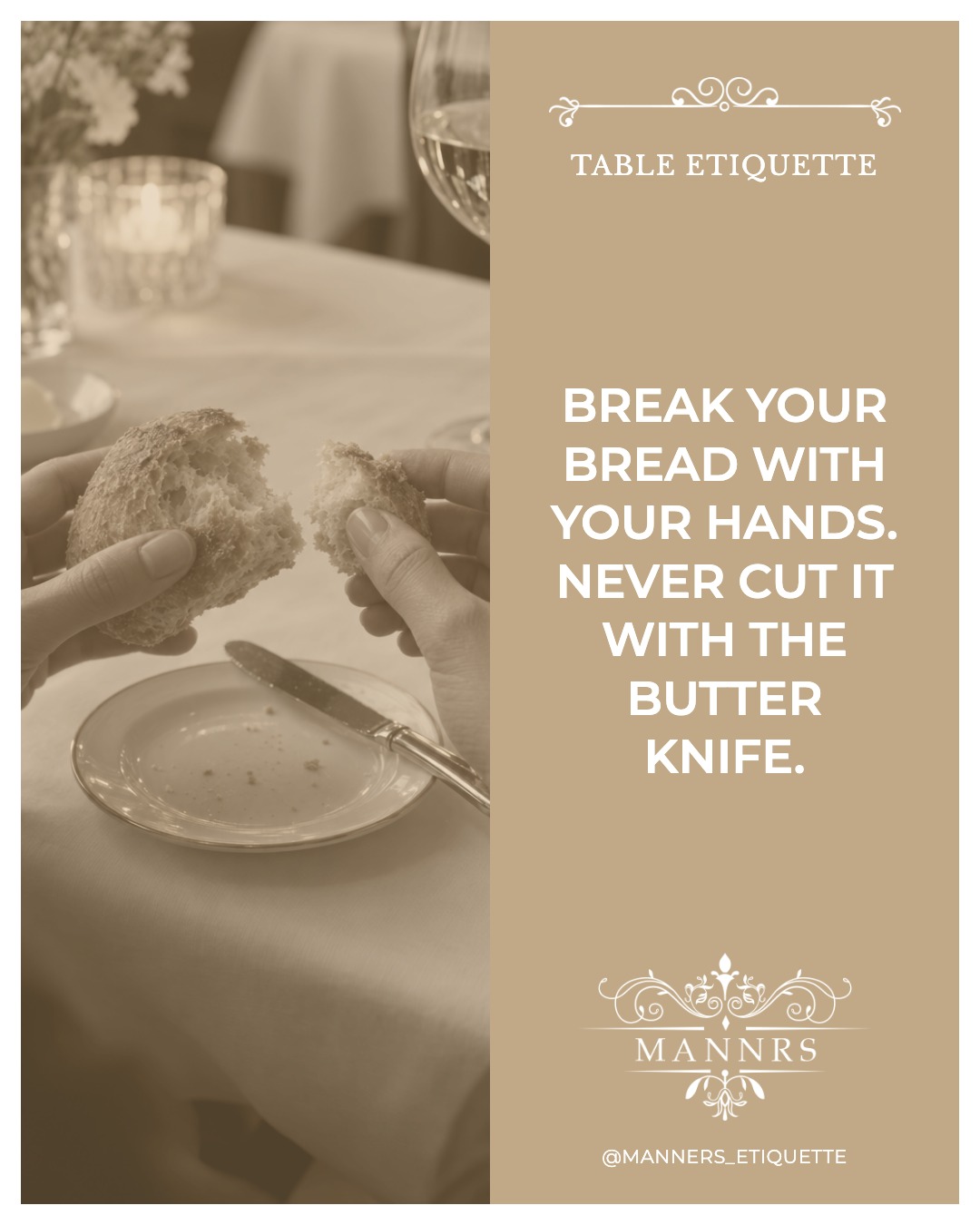
Break your bread with your hands
Tear off one bite-sized piece at a time and butter only that piece. Don't cut the roll in half with your knife, and don't butter the whole roll at once.
-
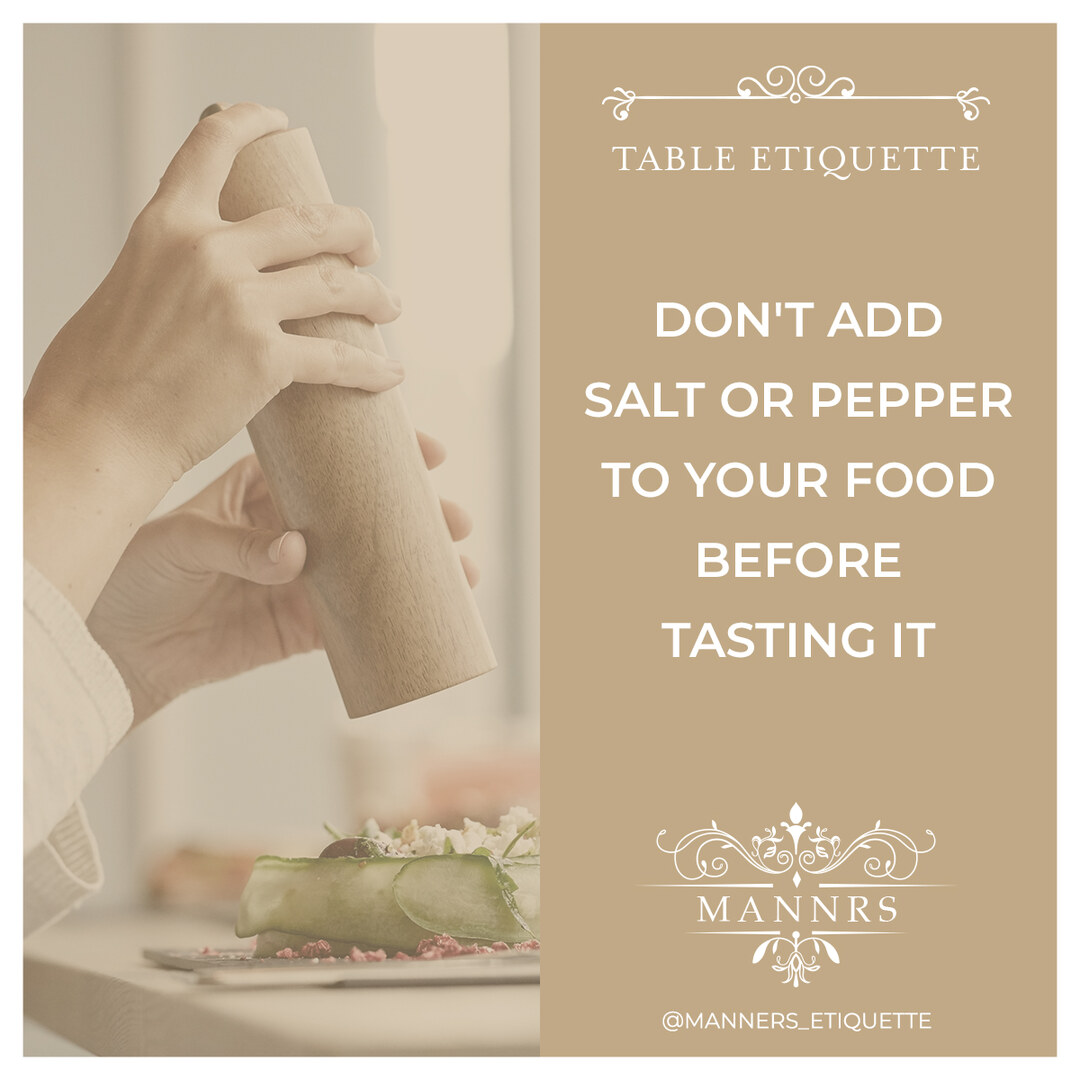
Taste before you season
Reaching for the salt before you've taken a bite tells the cook you expect their food to need fixing. Taste first. Then season, if you really must.
-
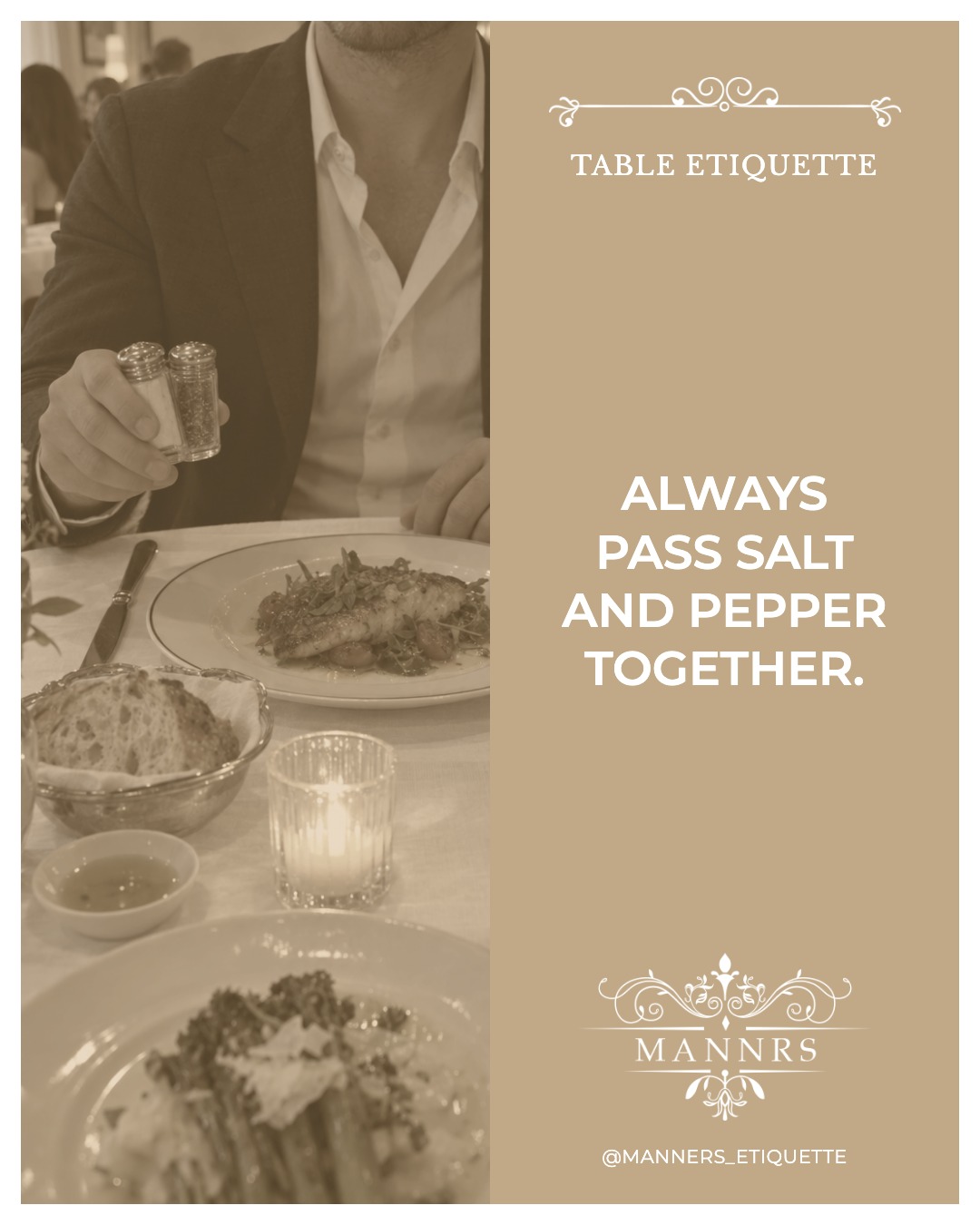
Pass salt and pepper together
They travel as a pair. If someone asks for the salt, hand over both, so the next person doesn't have to ask twice.
-
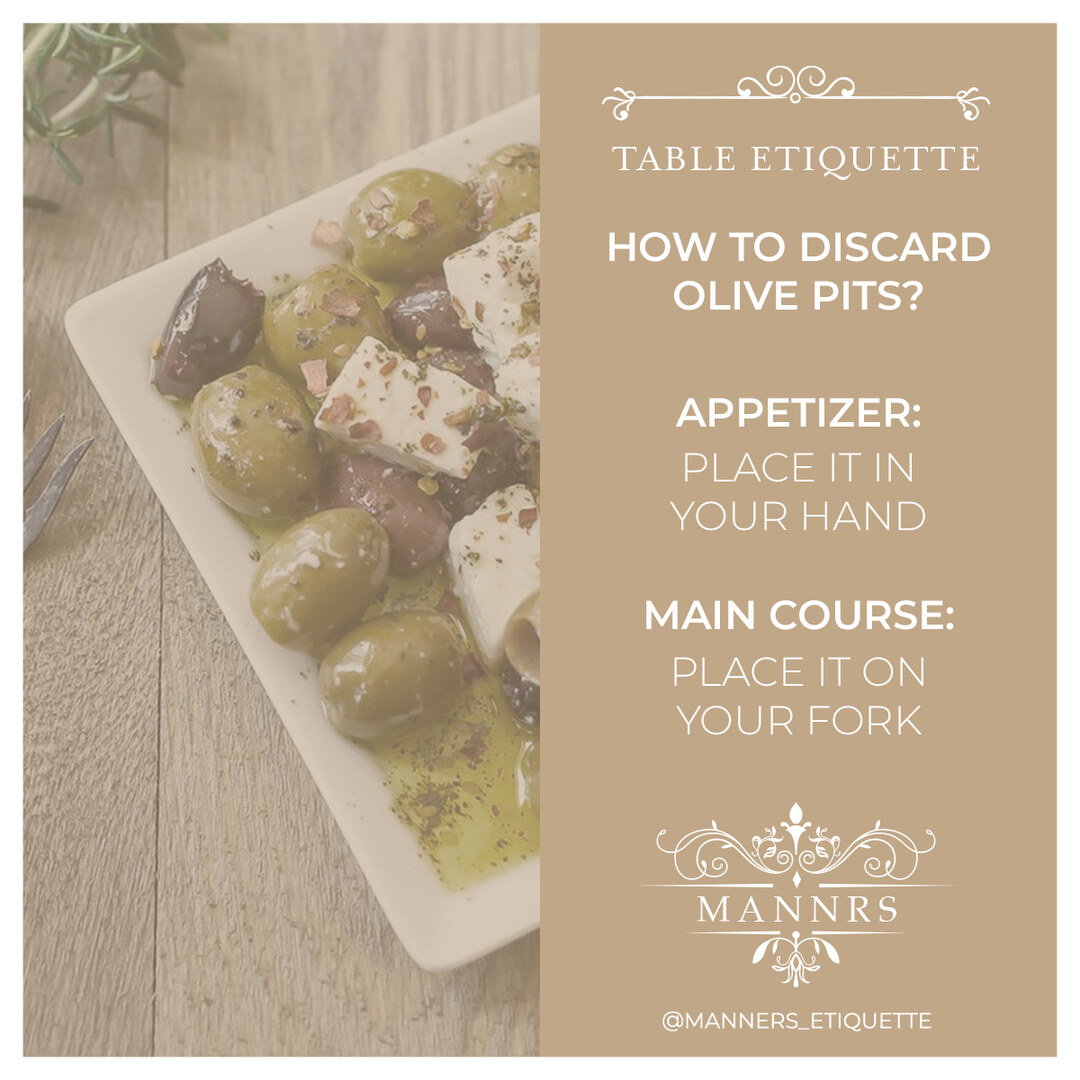
Olive pits leave the way they went in
A pit leaves your mouth the way the olive went in. Olives you ate with your fingers go into your hand, then onto the edge of your plate. Olives you ate with a fork come out onto the fork.
-
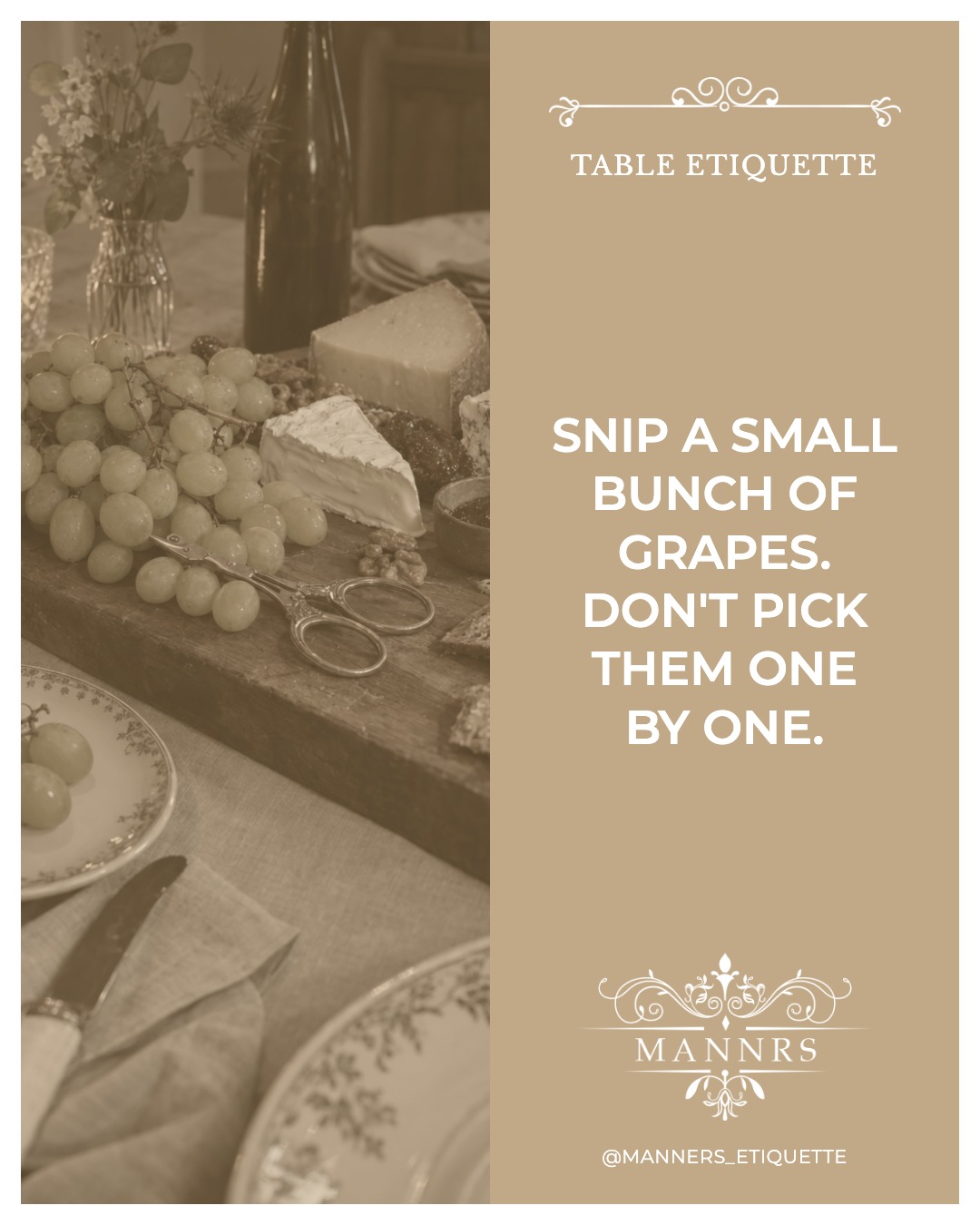
Snip a small bunch of grapes
Don't pick grapes off the bunch one at a time. Take a small cluster, with grape scissors if there are any, and eat from that.
-
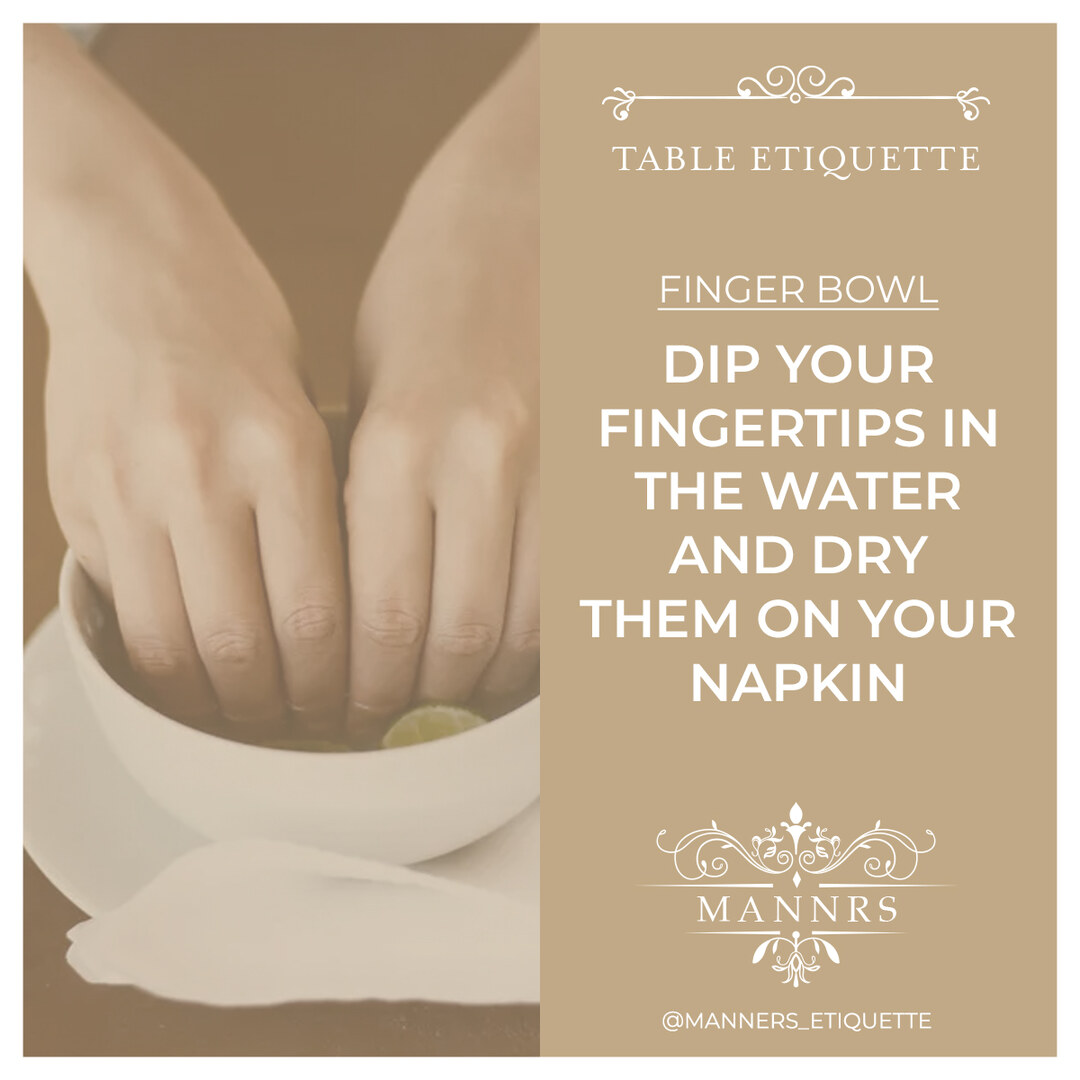
Finger bowl: fingertips only
A finger bowl arrives with food you eat with your hands, such as shellfish, or before dessert. Dip the tips of your fingers, one hand at a time, and dry them on your napkin. It is not a drink, and not for your whole hand.
-
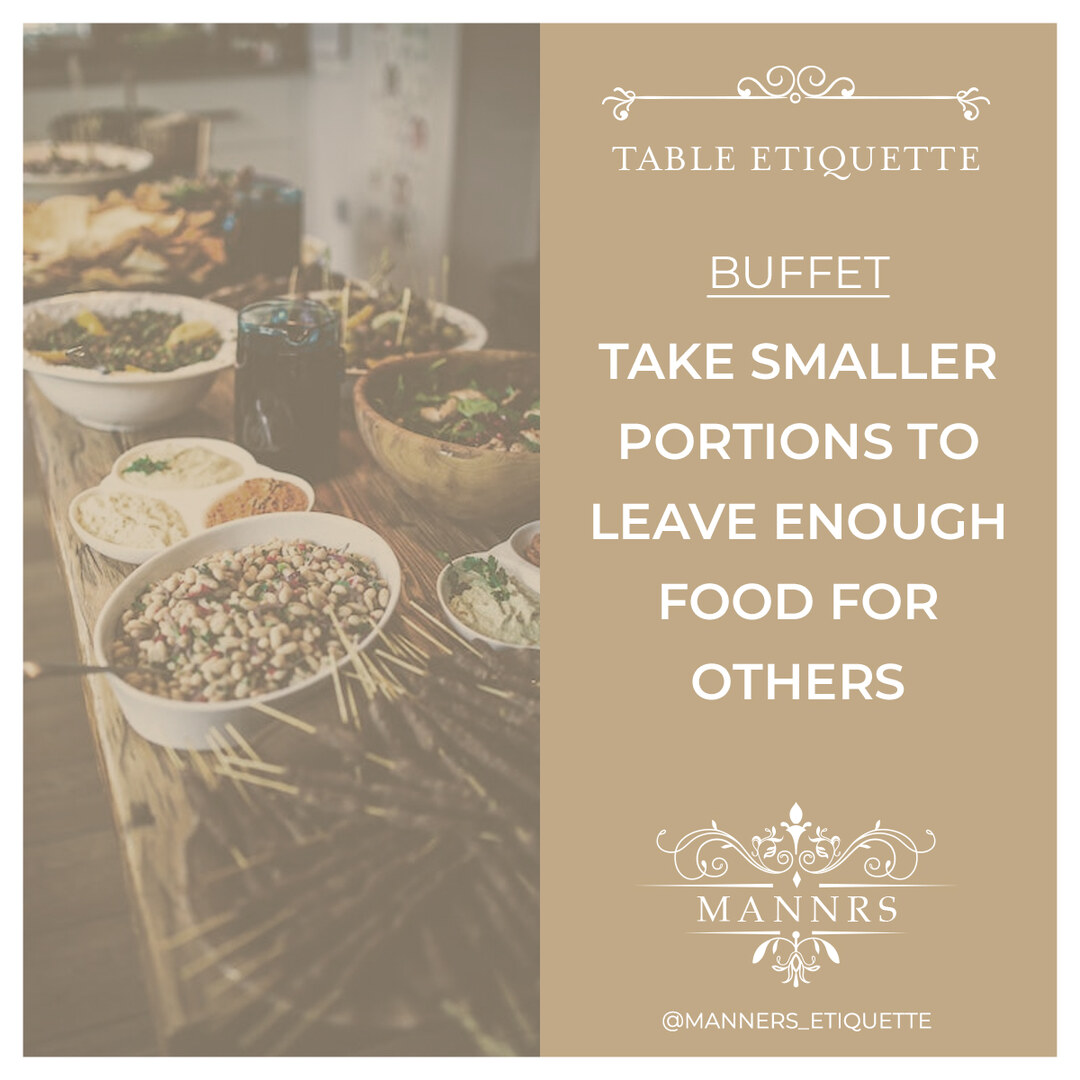
At a buffet, take smaller portions
Leave enough for the people behind you. You can always go back for more, and a plate piled high is hard to carry and harder to look at.
At the table
-
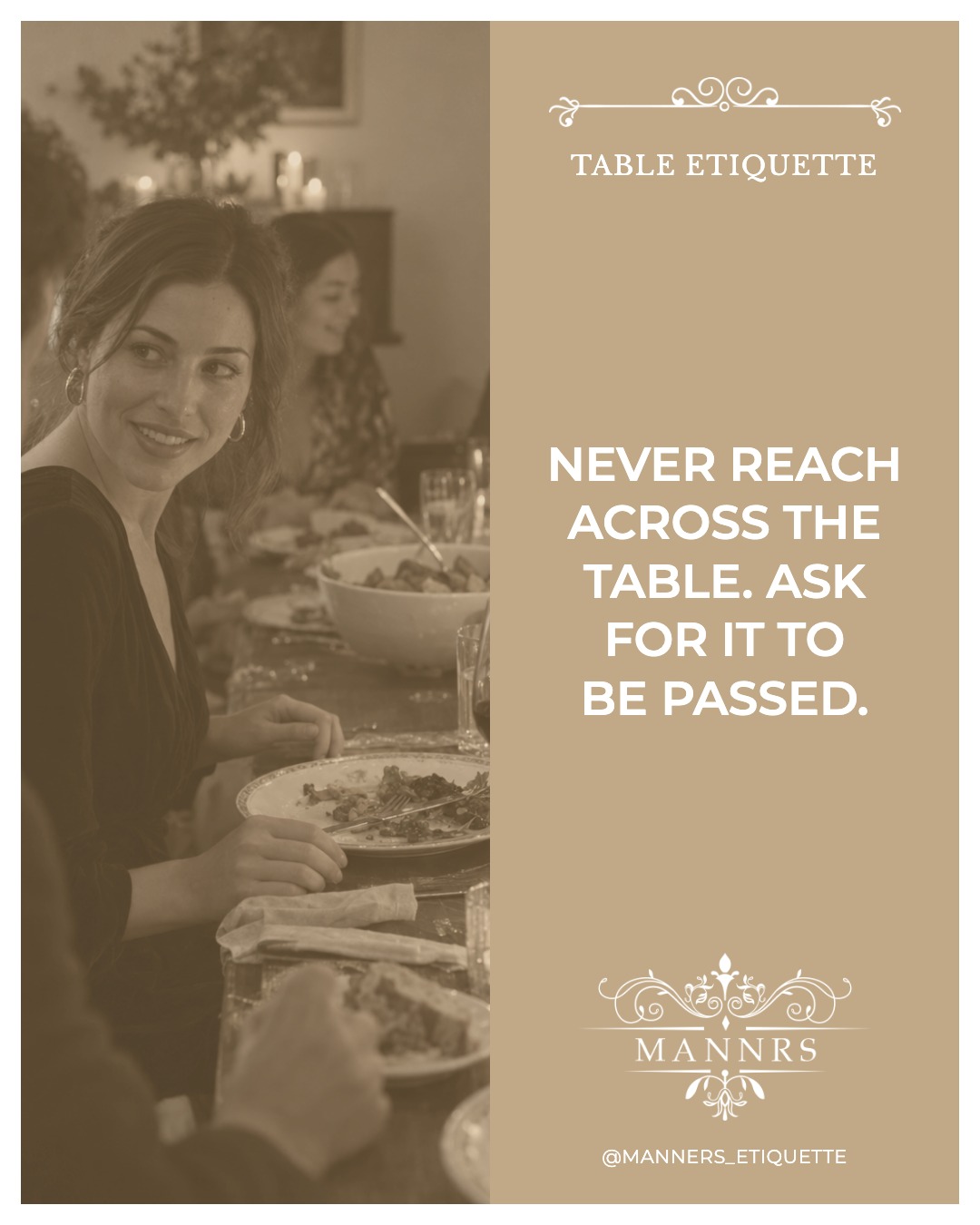
Never reach across the table
If something is out of reach, ask for it to be passed. Reaching across someone's plate is how sleeves end up in the sauce.
-
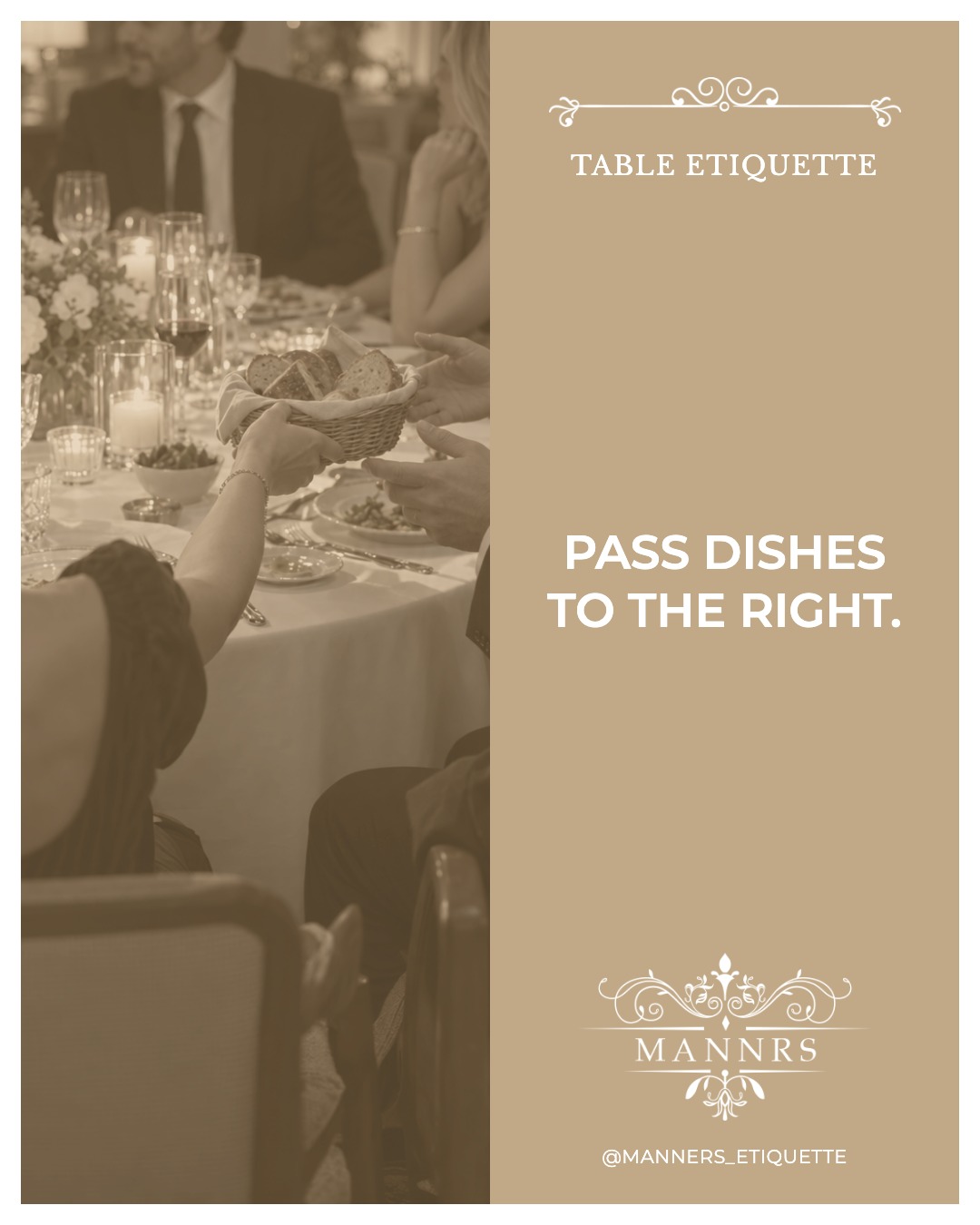
Pass dishes to the right
When dishes go around the table, they go counterclockwise, to your right. If everyone follows the same direction, nothing collides in the middle.
-
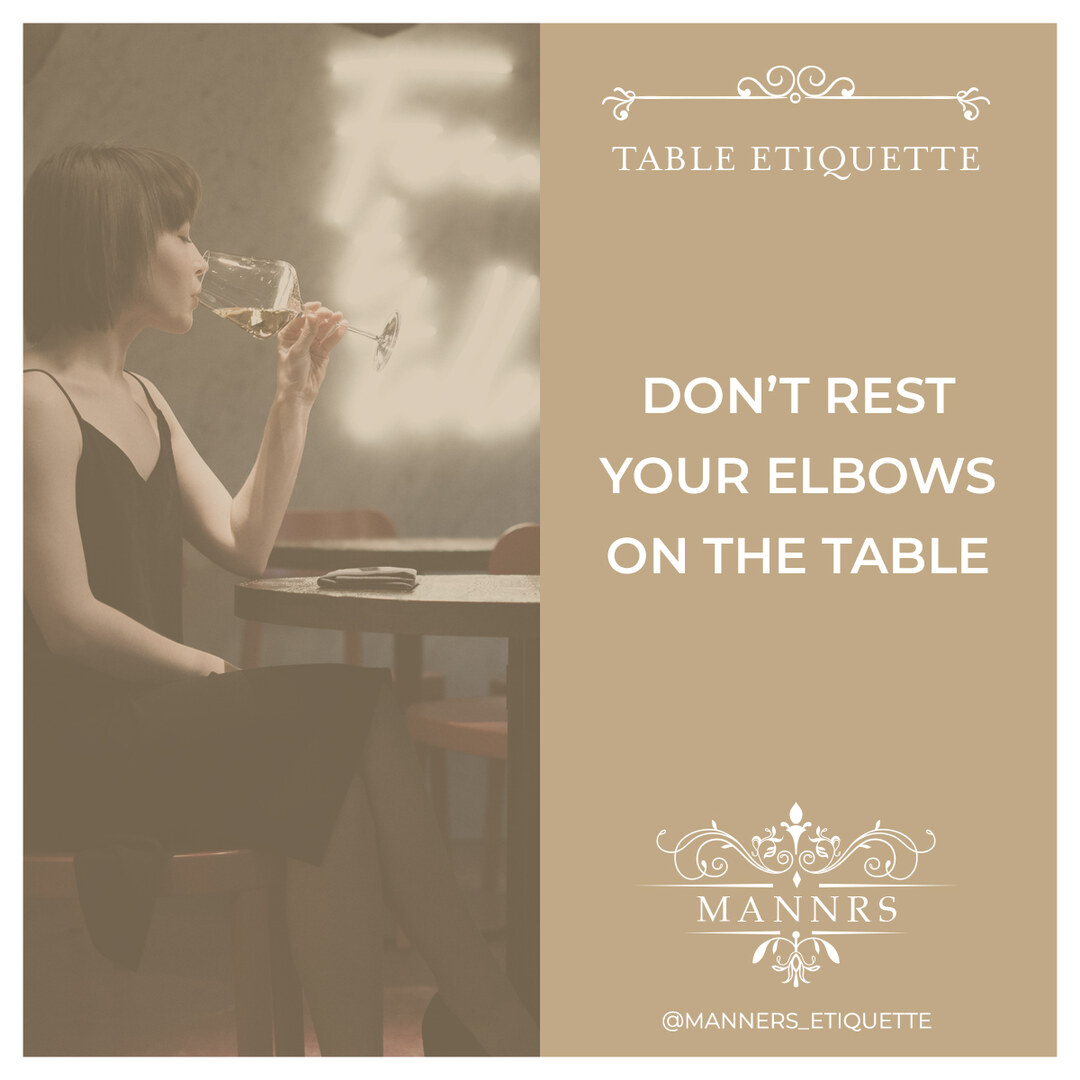
Keep your elbows off the table while you eat
Elbows on the table crowd your neighbours and hunch your posture. Between courses, when the plates are cleared and the conversation takes over, resting your forearms on the table is fine.
-
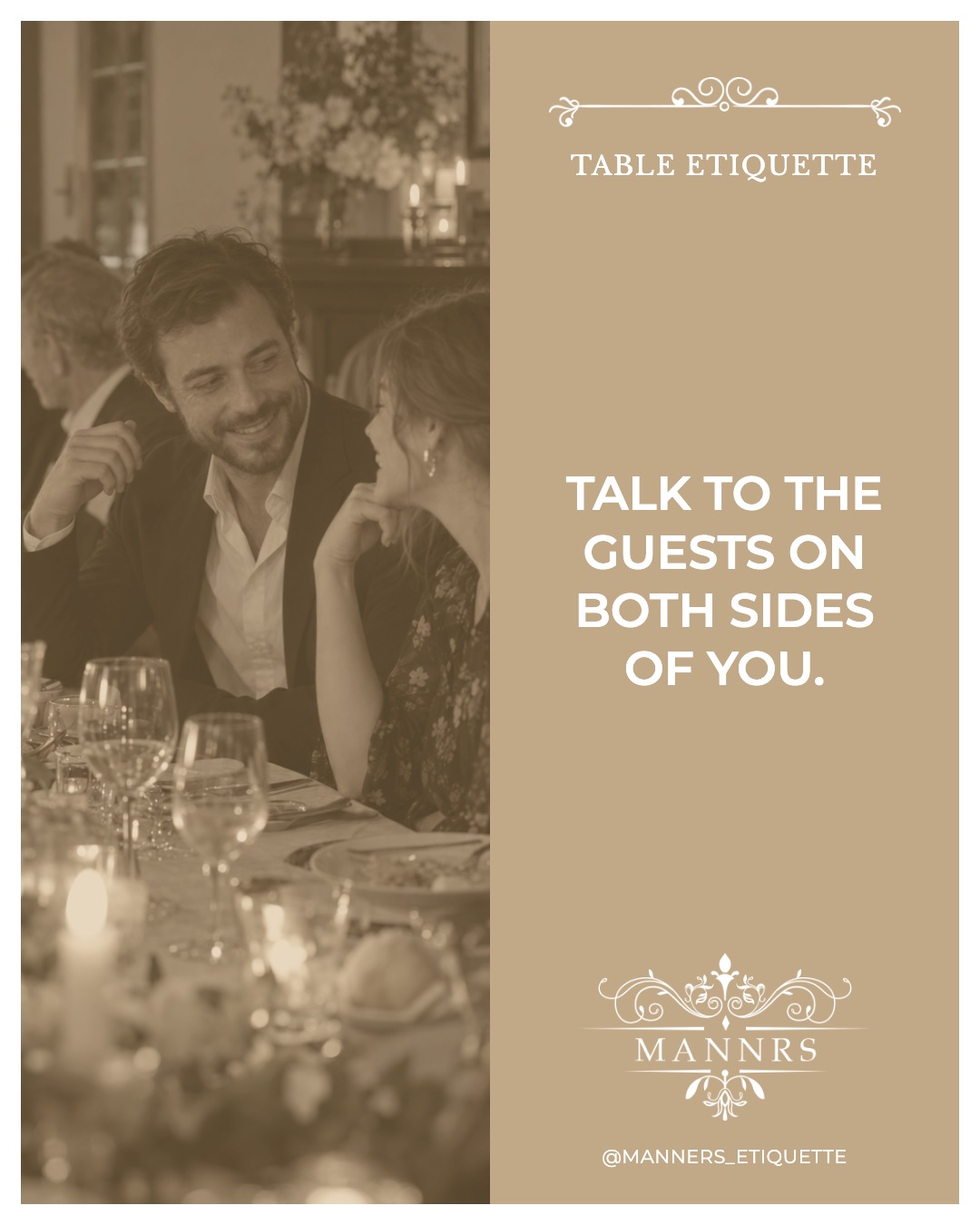
Talk to the guests on both sides of you
At a seated dinner, divide your attention between the person on your left and the one on your right. Spending the whole evening turned to one side leaves the other neighbour with nobody.
-
Pace yourself
Watch the table and keep roughly the same speed. If you notice you're well ahead, slow down. Nobody enjoys eating while everyone else waits.
-
Never groom at the table
Lipstick, combs, nail files and toothpicks belong in the restroom. Checking your teeth in the back of a knife is a step too far.
-
Don't split the bill down to the cent
When the bill comes, split it evenly or let one person pay and settle up later. Working out who had the extra side dish holds everyone up and sours the end of a good evening. If budgets differ a lot, say so before you order.
How table manners change around the world
The rules above are the common ground of British and American dining. Sit down to dinner elsewhere and a few of them turn around.
| Country | Cutlery and hands | The plate | Also good to know |
|---|---|---|---|
| USA | American style: cut with the fork in your left hand, then switch the fork to your right to eat, tines up. | Mopping up sauce with bread is fine, and a second helping is a compliment to the cook. | Wait for the host before you start. Tip 15 to 20 percent. |
| UK | European style: the fork stays in the left hand, tines down, the knife in the right. | Knife and fork together on the plate when you're done. | Be on time at a restaurant, people wait for you to order. Never wave or call out for a waiter. |
| France | Wait until everyone is seated and served, then bon appétit. | Leaving food is frowned upon, above all in someone's home. Finished: knife and fork side by side. | To decline more wine, leave your glass mostly full. The bill is usually not split. |
| Italy | Hands stay above the table, not in your lap. Elbows off. | Don't fill up on bread. Use it to soak up the sauce at the end. | Start when the host says buon appetito. Stay at the table until everyone has finished. |
| Japan | Chopsticks never stand upright in rice, never point and never pass food to another pair. | An empty plate tells the host you're satisfied. Slurping noodles is fine. | Itadakimasu before the meal, gochisousama deshita after. Pour for others, not yourself. No tipping. |
| India | Eat and pass food with your right hand, and wash your hands first. | Your host may fill your plate. Accept what's offered, especially chai. | A refusal can be read as polite protest, so expect to be offered again. |
| China | Chopsticks never upright in the rice bowl. Bones go beside your plate, not back into the bowl. | Try everything, and don't take the last piece from a shared dish. | Refuse a second helping once before accepting. Drink when elders or colleagues offer a toast. |
Frequently asked questions
Which fork do you use first?
Start from the outside and work your way in. The cutlery farthest from the plate is for the first course. If a piece of cutlery arrives with a course, use that one.
Where do you put your napkin when you leave the table?
On your chair, loosely folded, if you're coming back. When the meal is over, place it to the left of your plate.
How do you show that you've finished eating?
Lay your knife and fork together on the plate, handles pointing to about four o'clock. Parallel cutlery on the plate is the signal almost everywhere; only the exact angle varies by country.
Is it rude to put your elbows on the table?
While you're eating, yes. Between courses, when there's no food in front of you, resting your forearms on the table is fine.
Can I use my phone at the table?
Keep it off the table and on silent. If you're expecting an urgent call, say so at the start and step away from the table to take it.
One rule a day on Instagram
This guide grew out of four Table Etiquette series on Instagram, where we share one rule a day.